
|
|
After the Claim
Search Vibrationdamage.com
|
|
|
|

Search Vibrationdamage.com
|
|
Once you have notified the contractor and the sponsor of your ground vibration-related damage, things will probably begin to happen fast, at least for a time. Here's a little of what you might expect and how you might handle it. If you retain an attorney, inquire for direction and always follow it. Readers of this chapter of the CVDG Pro should also read Damage Inspections for more insights on preparing for, conducting and documenting a damage inspection. Damage Inspections Almost immediately after you report it, you will likely get multiple requests for various people to inspect the vibration damage. The more extensive the damage, the more people who will want to view it or send people to do so in their stead. Chances are you will have to show the damage to representatives for the construction company, their insurer's adjuster, the sponsor of the work (often a governmental organization) and their insurer's adjuster, your insurer's adjuster, one or more engineers and your attorney, if you retain one, at least. This can become very time-consuming, if there are many damage sites on your property. But, it is to your advantage to have the damage as well-documented by as many viewers as possible. Conducting the Inspections You should be both thorough and forthcoming in showing the damage you believe was caused by construction-induced ground vibration. Be careful in what you say about its cause or any other circumstances not relating directly to the damage. Make sure that you cover every type and location of damage of which you're aware, both inside and outside. Don't try to simplify it or save the inspector time by glossing over some of it. Only leave out damage sites if the inspector specifically requests that he not be shown all the sites. Note such refusals to see all damage in your timeline narrative. If the person inspecting the home doesn't see everything or doesn't care to do so, that should be his responsibility, not yours. If you haven't fully surveyed or presented the damage, state that fact to any person who views it. Exercising Control Over Inspection Visits Most viewers of the damage will take photos and/or videotape of their
visit to the home. You must always keep in mind that these visitors are looking
after their or their company's interests, not yours. You don't want to allow
these visits to turn into "fishing expeditions", where photos are taken of your
dirty laundry, over-full closets or other items unrelated to damage, which might
be used against you. With that in mind, the house should be reasonably clean and
uncluttered, to the extent that an acceptable amount of effort can bring that about.
Unless you have damage in them, close doors to closets and rooms which are not in
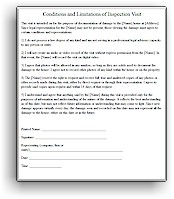
use One way to gain some control over what records are created in these visits is to prepare a document for signature by all inspectors which limits what can be recorded and preserves your right to a true copy of any photos or video taken. An example of such a Conditions document (shown at right), used by me, is available in the CVDG Professional Edition in the Conditions Documents chapter. We found these signed documents very useful when various opposing "experts" and adjusters "lost", or simply refused to produce, their photos and video, as they had to admit under oath that they had violated the conditions set on the inspections. If you have retained an attorney before such visits begin, check out with him/her how you might control inspection visits.[2] Inquiries from Neighbors As this parade of people goes on, neighbors may start to ask about the reason for it. You may then feel a need to show them the damage, as well. If so, confine any comments you make to the damage itself. You can expect such viewings to continue occasionally for pretty much the life of your claim. Of course, it's a good idea to inquire, as neighbors see your damage, whether or not they have looked for damage in their homes. You may have to tell them where to look for damage and how it appears. Meetings, Phone Calls, Conversations From personal experience, I would say that it is a good idea to create a video record of every meeting you attend involving the opposing side which deals with the damage or construction. This includes visits by "experts", especially those hired by the construction or insurance company, to view your damage. There is a high probability that you will wish you had videoed such meetings and visits, if you don't do so. Exact times of incoming calls are easily gotten from Caller ID, if you have it. Use it to get the information into your timeline narrative before it is pushed out of memory by later calls. Take some notes of each conversation you have, with names, dates and times included. These notes need not be extensive; they will provide you with a day-by-day record of what happened during the years it may take to bring a claim to a conclusion. If You Sue... Filing suit will multiply the time demands several times over. You will have interrogatories to answer, production requests to fulfill, and meetings with your attorney to attend. If you can't reach a settlement after the filing, you'll probably have to attend depositions (yours and others) and help the attorney get ready for them to the extent that you can and that he wants help. More information on the legal process can be found in our chapters, Involving an Attorney and Litigating, as well as many other such chapters in the CVDG Pro.
|
|
|
E-mail to drzeigler@vibrationdamage.com or send online questions or comments about Vibrationdamage.com.
|

 .
.